
On June 28, 1919, Madame Alasia Bought Bread and Milk


On June 28th, 1919, the same day that the Treaty of Versailles was being signed to end the First World War, Madame Catherine Alasia was writing in her Ledger Book of Deliveries and Purchases, "lait" and "3 livre du pain." Total, 2.30 French Francs.
Her purchase of milk and 3 pounds of bread
was a modest and prosaic task considering the gravity of what was
taking place in Versailles to the north of her.

I found Mme Alasia's little 3"x5" account book at a local flea market and for the past few months, I've been picking it up, leafing through it, putting it down, and wondering what it all meant as I was seduced into the past whenever I opened it. I paid a mere €2 for it, a complete steal considering its age and how it's stirred my imagination.
One
sunny afternoon, my
French friend and I sat in my kitchen and poured over it, page by page,
she with an innate understanding of French culture and me as a curious
time traveller. We were both
eager to decipher what I considered to be a romantic food find.
Together we pieced together the closest we could come to the truth
without having been there.
Mme
Alasia's entries began in 1917 and ended in 1920. Most
likely, she was a cook for a Catholic residential school or an orphanage
in Beausoleil or somewhere
between Menton, France and Monaco. In her 30 page ledger book, she
recorded her
purchases and deliveries, and frequent travelling expenses of 3.60FF to
Beausoleil near Monaco and to other nearby villages. We assume that she
had many children to feed based on her almost daily purchases of vast
quantities of milk.
Why Catholic? Mme Alasia mentions "Mother Superior" and
"the sisters" in one of her entries and my French friend noted
that every year around Easter, Mme Alasia bought lamb which is
traditionally eaten by Catholics at Easter.

Milk,
bread, flour, and butter were her most frequent purchases. Entries for
vegetables, fruit, and meat were rare but one entry for soulier (shoes), pantoufle (slippers) and patin was intriguing.
Patin
were felt booties that you would slip on over your shoes or directly on
your feet, and then polish your wood floors by sliding around in them.
I'm not sure who
would have worn the patin at the time, perhaps Mme Alasia or an energetic child but the idea of someone slipping on patin and
sliding around to polish floors is utterly charming to me.
I'm glad I found this little book and that I could share it with you.
I
think it's a remarkable and intriguing little time capsule of what must
have been a difficult and austere time to be living in France.
 |
| "Receive, dear Mother Superior, our best wishes for the holidays and hello to the sisters" |
 |
| March 4-8, 1920: "trip, bread, flour, stamp, milk, flour, return to Beausoleil, butter, meat. Total, 19.85 FF" |

Ariane. The French Apple with its own Ambassador

As I do every spring, I start to feel a bit homesick for the "old
country," which in my case is Canada, so I dug around the fruit keeper
in my "frigo" for a taste of home: my secret cache of McIntosh apples
or "Macs" as they are affectionately called by Canadians. I brought
them back with me in December and I've been rationing them like Scrooge
to make them last as long as I could.
I guess I'd eaten them all and not remembered because after a few minutes of digging, I came up empty handed. I suspected hubby until his whereabouts were verified.
I guess I'd eaten them all and not remembered because after a few minutes of digging, I came up empty handed. I suspected hubby until his whereabouts were verified.
 Just
by chance when I was at our local Health Food shop the next day, I was
cruising the produce section when I spotted some apples called, "Ariane"
that looked a lot like McIntosh. I filled a bag with a few, hoping
that they tasted like a McIntosh as much as they looked like one.
Just
by chance when I was at our local Health Food shop the next day, I was
cruising the produce section when I spotted some apples called, "Ariane"
that looked a lot like McIntosh. I filled a bag with a few, hoping
that they tasted like a McIntosh as much as they looked like one.
I adore McIntosh apples, especially in the fall when they're straight
from the tree, all crisp and intense, acidic and sweet all at the same
time. Believe it or not, I've delayed our return to Monaco in the fall
just so I could enjoy the McIntosh season in Canada!
Generally speaking, I find French apples too sweet and their taste for
me at least, is a bit monotone. When I do buy apples in France, more
often than not, I reach for the Granny Smiths.
 What
a pleasant surprise when I tasted the Arianes and discovered that
indeed, they are remarkably like a Mac! They were a bit sweeter than a
Mac but they had a good balance of sweet to sour, crisp and delicious.
What
a pleasant surprise when I tasted the Arianes and discovered that
indeed, they are remarkably like a Mac! They were a bit sweeter than a
Mac but they had a good balance of sweet to sour, crisp and delicious. After devouring a few, they were small after all, I did a bit of research to learn more about them.
The Ariane apple was developed by French Company, Pomalia and was launched commercially in 2003. It's claim to fame, besides it's excellent flavour, is that it's scab resistant and so can be grown more or less organically.
The Ariane is currently grown by 250 producers around France, primarily in the Loire Valley (in the west), the Monts du Lyonnais (to the east of central France), the Périgord and Tarn & Garonne (in the south-west), and Provence (in south- east). In 2011, 20,000 tons of Arianes were grown.
The Ariane had its moment of glory this February when it was showcased at the annual Fruit Logistica tradeshow in Berlin where 2,400 fruit and vegetable producers from around the world gather to showcase their goodies. The mind boggles. I plan to go next year.
It seems I'm not alone in my appreciation for the Ariane apple. Alain Baraton, Head Gardener of the Château de Versailles is Ariane's official ambassador. You've got to love an apple with its own ambassador.
Well, with this sort of taste and pedigree, I think I've found a worthy replacement for the McIntosh. At least until the fall.
Make Jam and Jelly the Easy French Way

Before I discovered them, I was a jam purist, using only sugar, high heat, and the natural pectin in fruits to obtain the proper consistency in my preserves. On a whim, I whipped up a batch of marmalade with Confisuc and I've been using it ever since.
These specialized products are a combination of gelling agent and sugar and I think they make a better jam or jelly simply because they reduce the cooking time to mere minutes. With this short cooking time, the full, fresh, intense flavour of the fruit really stands out.
 French companies St Louis and Béghin Say, and German company Dr Oetker, each make products that are a combination of a gelling agent and sugar. All you need to do is add the correct amount of fruit and cook the mixture for a few minutes according to recipes that you'll find on their websites.
 St Louis makes 3 products under their special line called, Confisuc. Special Gellée is for making jelly, Special Abricots is for making Apricot jam and Special Confitures is for making jam with all other fruits. Each of these products is a combination of sugar and pectin as a gelling agent.
Béghin Say has three products under their Special Confitures label, two are for making jellies, one with white sugar and one with brown, and a third, Allégées, is specially formulated so you can reduce the amount of sugar you use by 30%. They also have a great web site with recipes for almost every fruit imaginable.

Dr Oetker makes 4 products. Two are a mixture of sugar and gelling agent: Fruttina Extra to make reduced sugar jams, and Fruttina Fraise, specially formulated for making strawberry jam. Their two other products are packets of gelling agents Gélfiant Priz Classique made with apple pectin and Gélfiant Priz Extra to make jams with a reduced amount of sugar.
The final product is Vitpris by Alsa which is a mixture of pectin, dextrose, and citric acid. It's basically the French version of the North American pectin products made by Certo or Bernardin. You can also use Vitpris to make pâtes de fruits so I always keep a box of it on hand in case I find something interesting at the market or in the garden. They also include a nifty little recipe book with each box.

If you're new to making jams or jellies, you may want to visit the Ball Preserving website which has excellent videos and advice on how to get started making preserves. There are some important basics you should follow if you intend to store your preserves unrefrigerated for any length of time.
Now that you've found some great fruit, bought your jelling product and have your croissants all ready to go, you'll need some jars. I always buy mine in Italy at the Supermercato Conad in Latte. They sell pretty Bormioli Rocco Quattre Stagioni preserving jars in different sizes and at a good price to boot!
With spring finally here and so many fabulous fruits on the way, why not whip up a few jars of home made jam to slather on your morning baguette and share with friends?
Give it a go!

 |
| The view from La Grotta |
If you've lived in the region for a while, you may know the charming Bar la Grotta. It's the first place you hit in Italy just across the upper French border crossing. You can sit for hours while you have drinks and enjoy the stunning views of the French coast from the terrace. Inside they have a small stock of Italian foods,wine, booze, reasonably priced scotch, and Italian lottery tickets so you can stock up after you pay the tab. Since we hadn't been there in ages, I took some time to poke around the shelves inside to see what was new.


Generally speaking, I'm not a fan of pre-packaged products but when I spotted a boxed mix for Farinata for a mere €2.99, I thought I'd give it a try and I'm glad I did. It's just one of a bunch of baking products that Italian food manufacturer, Lo Conte makes as part of their "Magic Flour" line.
 |
| French Socca in Monaco's Port Hercule |
Farinata is a traditional Italian peasant food made with chick pea flour, salt, water, and olive oil. In France Farinata is known as Socca and if you've ever been to an outdoor event in France or the outdoor market in Antibes, you've probably eaten it or at least seen it. The best stuff is made in a traditional wood burning oven from a Socciste who bakes it at ultra-high temperatures in big, round copper-bottomed trays. You can tell if it's good by the long lines of people waiting for it like hungry birds.
When we got home, I ran to the kitchen and went to it.
The kit consists of a 300g bag of chick pea and rice flours and a little 20g bag of flavouring, a mixture of powdered rosemary, mint, and salt. It makes two pans of Farinata, enough to serve 8 people as a generous snack or appetiser. It has the added bonus of being gluten free so it's ideal for anyone who's following a wheat-free diet.
 |
| Pretty golden chick pea flour |
After translating the instructions, which were quite vague, I mixed up two batches, one with and one without the herbs and both were delicious although we preferred the herbed version. In fact, we munched on them for the rest of the afternoon.
It didn't quite measure up to what comes from a traditional Socca vendor but for a home baked version made in an everyday oven, without the complex flavour imparted by a wood fire, it was still delicious. Add a glass or two of rosé and it would make a nice snack or appetizer to share with friends.
You can probably find the Farinata kit in most Italian grocery stores but why not get a nice view in the bargain?
Here then, are the English instructions with my extra, detailed notes should you ever decide to make it yourself. I recommend that you do!

Equipment
Pan 25cm x 32cm
Wire whisk
200ºC or 385ºF, 25 minutes plus 3-4 minutes broiling
Method
For 1/2 of the box or one pan of Farinata or, 6 servings.
Into a medium bowl, measure 150g or 1- 1/2 cups of the flour mixture and 10g or 1 tablespoon/half of the herb mixture.
To this you add 500ml or 2 cups of water, 20g or 2 tablespoons of olive oil.
If you're not adding the herbs, add 1 teaspoon or 6 g salt.
Mix well with a whisk. Let the mixture rest while you preheat the oven to 200ºC or 385ºF.
Coat the pan with 2 tablespoons or 20g of oil.
Before you bake the Farinata, to avoid spilling the mixture which is quite liquid, put the oiled pan in the oven and then pour the mixture into the pan.
After 25 minutes of baking, turn on the broiler and broil the Farinata for 3-4 minutes to brown the top.
In keeping with tradition, you should cut the Farinata into small squares and serve the plain Farinata topped with ground pepper. And of course, eat it with your hands.
Enjoy!
Food Foraging in Monaco

Of all the things Monaco is known for, I'll bet you never thought that food foraging would be one of them. You'd be surprised how many things you can find in and around Monaco that are edible and delicious. And free!
One morning on my daily power walk from our nest in Monaco-Ville to Larvotto Beach, I stopped to stretch out the old hamstrings and something nearby caught my nose that was sweet and enchanting like the smell of candy necklaces mixed with limes. It was obvious where the aroma was coming from. Under the nearby bushes where I had perched my foot, the ground was covered with hundreds of little sage coloured fruits about the size and shape of little eggs. They were Feijoa, a fruit not very well known here but very well known in Brazil where they are native and in New Zealand where they are common and used in baking and to make preserves.
Lucky for me, many of the fruit had ripened and fallen under the bushes within easy reach, safely scattered on a soft ground cover. Instinctively, my long forgotten childhood foraging training kicked in.
 |
| My Granny the Forager |
My grandmother was an avid forager and as I child she'd recruit me and my sisters for her little foraging outings. Together we'd collect rose hips from local parks, fiddle heads from forests in the springtime and little wild strawberries which were my favourite. I really didn't see the point nor appreciate her quirky enthusiasm at the time. Like most children I preferred to get all my food from the fridge or the cupboards.
Granny was a big fan of Euell Gibbons, one of America's iconic food foragers and author of Stalking the Wild Asparagus and other wild food guides. Mr Gibbons started foraging as a teenager to keep him and his family from starving. He may have been the butt of many jokes in the 1960's and '70's but look who's laughing now...
According to the The Huffington Post, food foraging is just the next step in the "eat local" craze even though it was simply a matter of survival for humans since the beginning of time. What with the world wide food scene being saturated and seemingly there's nothing new to eat, food foraging is building momentum and becoming fashionable.
Take for example Chef René Redzepi and his ground breaking Copenhagen restaurant, Noma where his menu includes ingredients that have been foraged from Denmark and neighbouring Nordic countries. He was recently awarded the San Pellegrino "Best of the World's 50 Best Restaurants" Award. He must be doing something right. Or interesting. Or both. His dazzling cookbook, Noma includes recipes for dishes like Sea Buckthorn and Beetroot Flødeboller, Bulrushes, Thuja Cones, and Ramsons Leaves. What could be more alluring than that?

I've been known to grab the occasional sprig of rosemary or lavender as I walk by a bush or to return from a mountain hike with some wild thyme stuffed in my pockets but finding those Feijoa kicked it up a notch.

Because Feijoa are so fragile they are not usually shipped which explains why they aren't found in places like Carrefour. In fact, fragility and rarity is one of the top characteristics of foraged food. I've seen Feijoa occasionally being sold by the local producers in the markets in Ventimiglia or Menton but only rarely and in small quantities.
When I got the Feijoa home I ran to my laptop, did some surfing to learn more about them and tentatively sliced a few open to taste them for the first time. Their skin was hard and slightly bumpy and the minute I cut them open I knew what to do with them. They tasted as delicious as they smelt, fruity and sweet and reminded me a bit like guava.
Over the course of 3 days of power walks, I filled my nap sack with them until the fourth day when they disappeared altogether, presumably gathered up by the gardeners and tossed out, fastidious bunch that that are. Or maybe another forager took them.
Over the course of 3 days of power walks, I filled my nap sack with them until the fourth day when they disappeared altogether, presumably gathered up by the gardeners and tossed out, fastidious bunch that that are. Or maybe another forager took them.
Luckily I had gathered about 2 kg, enough to create a new recipe: Fairy Cakes with Feijoa Glaze and Lime Sugar. My Brazilian friend snagged the rest of my foraged bounty to make jam after she smelled them in my kitchen and politely asked to have them.
I noticed last week that the Mairie planted some kumquat trees near the Oceanographic Museum. I wonder if they'd mind.....
The Trivet, Modernized.
 This Saturday morning, the market and surrounding shops in Menton were eerily quiet and it wasn't just because of the stormy weather which usually keeps the natives cowering indoors.
Everyone in town was crowded between the seaside and the pretty covered food market to take part in the ceremony to inaugurate the brand new Jean Cocteau Museum.
I dislike crowds so I saw this as a rare opportunity to visit a few of my favourite shops that are normally jam packed and impenetrable on Saturdays.
One of these is Geneviève Lethu, a high-end French kitchenware shop that always has interesting table ware, bake ware and beautiful Christmas decorations. I never leave there empty handed even though I usually go there not really needing anything.
This morning was no exception and I found something fun, new, modern and practical: a trivet, or more accurately, a trivet kit called Craggles by Swiss company, Zak! Designs.

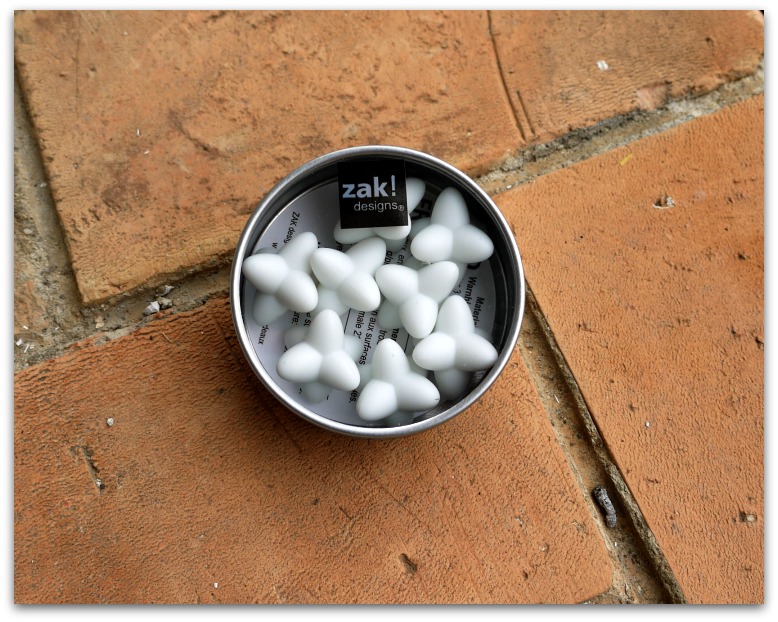
Enclosed in a little watch case about 3" wide, are 8 little white objects that look like bloated jacks. In fact, they are made of silicon, and each of them can support a weight up to 1 kg and are safe up to a temperature of 220°C.
How chic and clever is that? They take up practically no space at all, look great on the table, and can be used to reliably support any shape pot or pan.
I thought it fitting that I would find them on the same day that a unique, modern museum opened: two old ideas, both with a beautiful new twist.


Espresso for the Coffee Conflicted

 I don't drink coffee. Ever. Mind you, I love the aroma of coffee and I use it quite often in pastry and dessert making but I never, ever drink it. So when I'm in Italy with my friends, and they're standing at the bar tossing back espresso and looking cool, I want to be part of the fun too. So I order an Orzo.
Orzo, quite simply, is toasted barley, ground as finely as espresso and processed in the same manner as an espresso. It has the same dark, rich, deep mellow flavour of coffee without a caffeine kick. As with the best espresso, they should have a crema, or thin layer of creamy, rich foam that floats on the top.
Orzo reminds me a bit of Inka, a mixture of instant roasted barley, chicory and rye from Poland. I used to drink it as a teenager and now with Orzo espresso, I get to experience the grown up, sophisticated version.
 You can also find Orzo in an instant, freeze dried version to have at home and to use in baking. I've tried quite a few and this one, Orzo Tostato Solubile Biologico is a very good one. You can buy it at health food shops in Italy.
So it's a delicious "win win." You get to enjoy a hot beverage and look cool like your friends at the same time. Try it macchiato and with sugar for a real treat.
What more could you want?

Prince Albert's Honey

A dear friend of mine and frequent houseguest who knows what a foodie I am, recently surprised me with a rare little something that was manufactured right here in the Principality.
She was one of the few lucky recipients of a jar of the first batch of honey or "Lot 001" from HSH Prince Albert's new private apiary in Monaco's Fontvielle neighbourhood and here it was, on our breakfast table.
After profuse thanks, I grabbed a spoon, dipped it in the jar, and popped it in my mouth. The honey was quite thick, almost resinous, with a fruity but not floral flavour, and a dominant finish of pine. Two words would sum it up: delicious and intriguing.
 Of course the minute I finished licking my spoon I shot over to Fontvielle to see the Prince's apiary for myself.
The Prince has always been ecology-minded, introducing forward thinking green initiatives for the Principality and here was one delicious one underway right within our own borders.
The Prince's rucher or apiary, consists of 6 ochre hives snuggled into a lovely, lush garden on the roof of La Musée des timbres et des monnaies, or Museum of Stamps and Coins, just to the west of the Zoo. It was obvious once seeing the vegetation on the roof top garden why the honey tasted the way it did: It was dominated by umbrella pine trees.

As it turns out, urban bee keeping is taking off world wide. Case in point, amidst the towering skyscrapers of Hong Kong in what must be the world's most hostile environment for bees, designer Michael Leung has become Hong Kong's first urban bee keeper. Mr Lueng founded his company, HK Honey in July 2010 and along with his network of Hong Kong bee keepers they produce enough honey to create an exclusive range of honey based products to keep his shop stocked year round. In true Hong Kong style, he also designs chic hives.
Hopefully the Prince's apiary will continue to be a success and he will make enough honey to sell to others or at least bestow a jar or two upon we humble residents.
I'll be one of the the first in line.

Jelly Moulds off the Beaten Path
 Yesterday was my last Sunday in Canada before I crossed the pond to head back to the south of France to snuggle into our seaside shack for the winter.
So with time nipping at my heels, my fab friend Sean and I planned a last hurrah visit to one of our favourite flea markets, McHaffie's, about a 45 minute drive from Ottawa. Little did we know that the real find for me was just a few kilometres away.
Driving back to Ottawa we spotted a small hand made "Garage Sale" sign on the side of a dirt road so of course we veered off the highway like ferrets to see what was up.
I'm glad we took the detour. When we arrived at the sale we found the driveway sprinkled with moulds and bake ware. There were so many to choose from that the vendors encouraged us to take them all off their hands. Very tempting, but cooler heads prevailed!
I scooped up a modest 40 little jelly moulds for a mere 10¢ a piece.
I'll use them to make jellies and with enough butter and flour they'll be great for making pretty little cafe cakes.
You just never know what a little last minute detour may bring.

Two New Favourite Vintage Finds

I never lived through the '50s but that decade somehow seemed simpler and happier perhaps because almost everything was available in comforting colours like turquoise and pink.
During two recent day trips I unearthed two vintage finds. The first is an original aluminum colander in perfect condition for $4 from the Almonte Antiques Market. If you're into vintage, I think the charms of the colander are obvious, particularly at $4. The other find is a great retro kitchen timer from Dulton for $22.

I bought the timer from a vendor at the Covent Garden Market in London, Ontario and when I spotted it I bolted straight over to the display. I'm not sure why no one came up with it before, it's so practical. It's actually 2 timers in one, one on each side, so you can time two things at once or set a warning bell on the first timer before the second timer rings. The most difficult part was deciding which colour to buy. It's available in blue, pink, olive, grey and lime green. Decisions decisions!
Any cool vintage pieces in your cupboard?

Bling your Food Thing. Add Gold.

What with Greece about to default on its loans, the US going through its debt ceiling shenanigans and the recession still nipping at our heels, everyone seems to be stashing his cash in something safe: precious metals, especially gold.
Personally, I prefer my gold in either of two ways: wearing it or eating it!
Personally, I prefer my gold in either of two ways: wearing it or eating it!
 |
| Bling your cream soup |
 |
| Bling your strawberry spongecake Napoleon |

While perusing the perfect tableware at the Takashimaya department store in Tokyo recently, I stumbled upon a handy little box of gold flakes. In true Japanese style, it conveniently comes with it's own pair of bamboo tweezers. The little tweezers make it easy to place the almost weightless gold flakes precisely here and there, on anything your heart desires without waste. How cool is that?
The good news is that you needn't fly all the way to Tokyo to find the bling. In fact, you can find edible gold and silver in many forms for sale in shops around the globe and quite conveniently, on the internet.
Golda's Kitchen, a Canadian bake ware and and cake decorating supplier has a huge selection of edible gold products. I use their gold paint all the time to create highlights on celebration cakes for golden anniversaries and weddings. For about $22 you can get .5 grams of real gold flakes to sprinkle atop your creations. If you prefer a "fool's gold", non-metallic version, they stock one that's made of gum arabic albeit without the same luminescence of gold but it does the trick nonetheless. A 1/4 ounce bottle will set you back an affordable $2.75. They also carry edible gold paint, dust on or spray.
If you're ever in Paris, you must pop into Mora for all the essentials you need to make French pastry. For €58, you'll get .5g of gold flakes. Now that's a cool souvenir to pop into your carry-on!
 | ||
| Bling your chocolate cake |
If price is no object and quality is the utmost in your mind, the Italian company Giusto Manetti Battiloro of Florence has been producing gold leaf for 7 generations. In fact, they've gilded the Kremlin, Versailles, Buckingham Palace and the Louvre. Their edible silver and gold leaf, flakes, crumbs and powder will elevate your cuisine to that of Renaissance work of art. You can find their products at DEAN AND DELUCA in New York where, for anyone who loves to cook, a pilgrimage is in order.
So why not add the bling? After all, it's much cheaper than jewellery!
 |
| Add vodka and paint it on |
 |
| Silver Leaf |
